Artificial grass
SBR granules for artificial grass: a buyer's guide in Malaysia
Ordering SBR granules for artificial grass starts with the turf specification, not the bag price. A football surface, a decorative lawn and an indoor training strip may need entirely different infill arrangements. Here is what to confirm before requesting a quotation in Malaysia.
What is SBR infill used for?
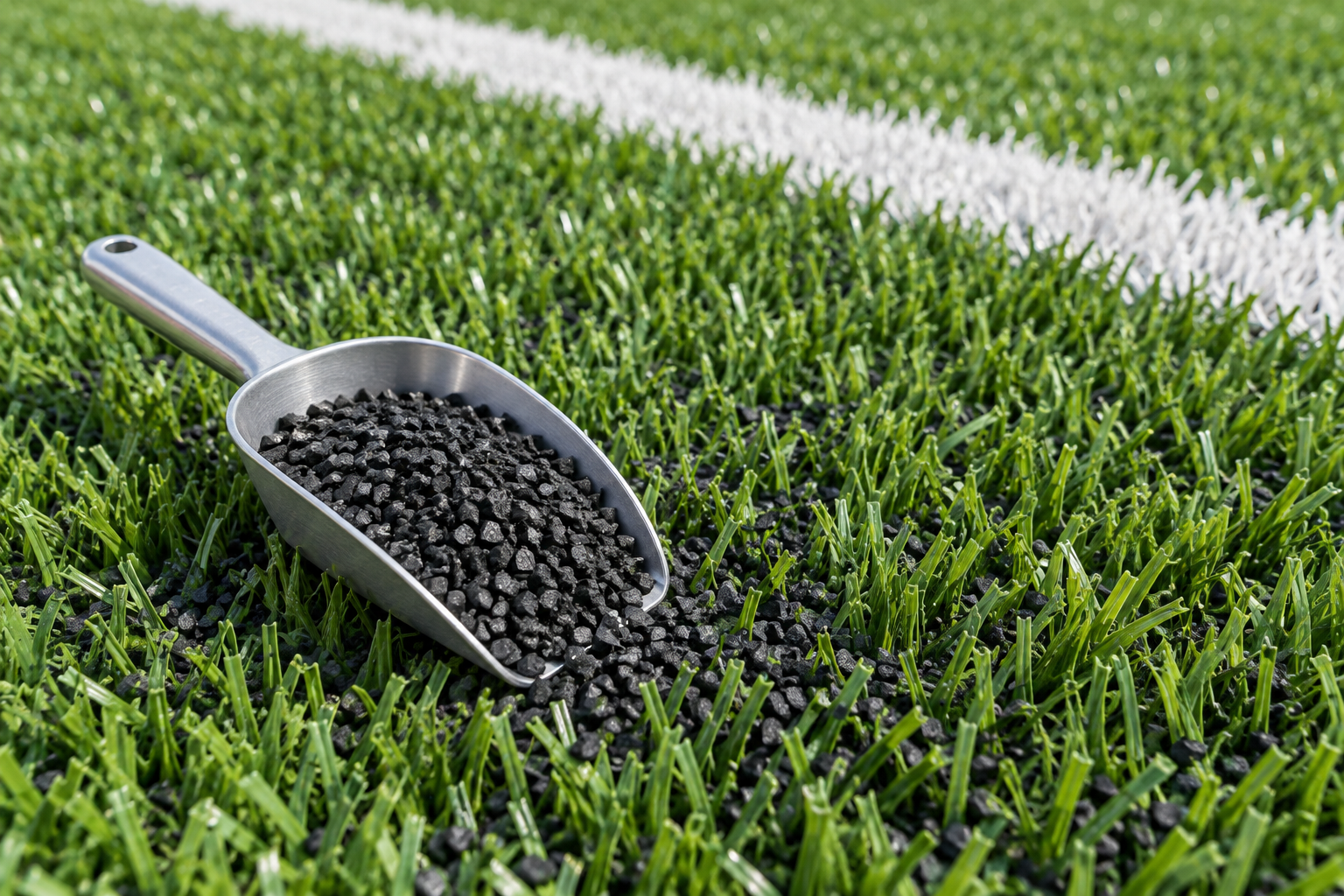
SBR means styrene-butadiene rubber. Rubber granules are used as performance infill in some artificial sports-turf systems, between the synthetic fibres. They are one component of the specified surface, alongside the carpet, any sand layer, shock pad and supporting construction.
FIFA describes third-generation football surfaces that incorporate sand and rubber infill. That does not mean every artificial grass product needs SBR, or that buying rubber granules creates a certified football pitch. Ask the turf supplier to identify the approved system for your intended use.
First, confirm that your artificial grass accepts SBR
Get the carpet brand, model and installation specification. Ask whether rubber infill is required, optional or excluded, and whether the proposed material is compatible with the warranty. Pile height alone is not enough to make that decision.
For landscaping, balconies, pet areas or decorative grass, do not copy a football-pitch recipe. Ask the manufacturer what that particular product requires. For an existing sports field, keep the original infill specification and maintenance record with the new enquiry.
Choose grading from the specification, not appearance
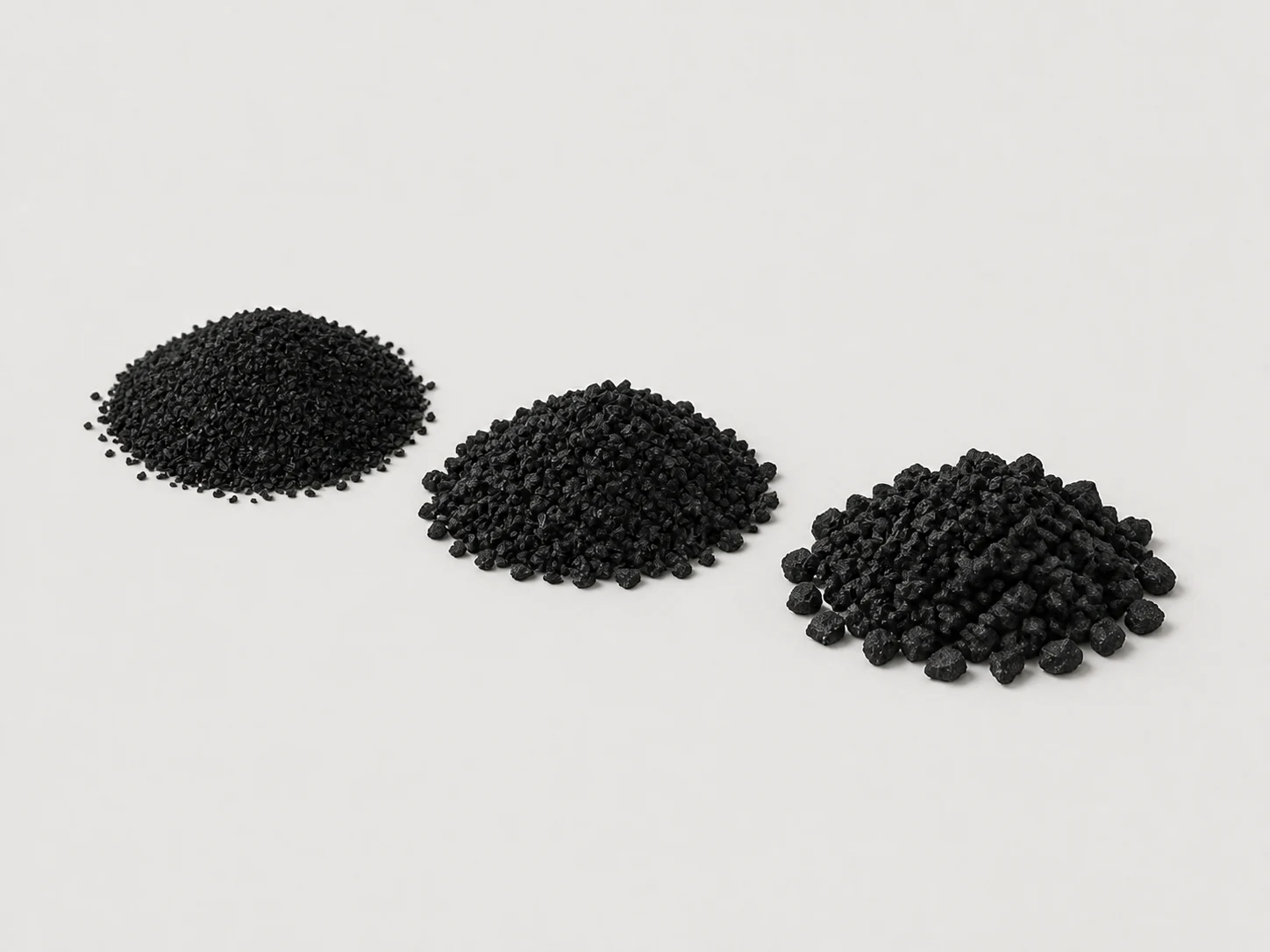
ACCT Global lists SBR granules in 1-3mm, 1-4mm and 5-8mm ranges. These are catalogue options across different applications, not three interchangeable recommendations for artificial grass. In particular, do not assume the coarser 5-8mm material belongs in your turf.
Request the required particle-size distribution and a representative sample. Ask about material origin, batch traceability, fines and foreign-material controls, plus any project-specific testing. Similar-looking black granules can still differ from the specified material.
How much SBR do you need?
For a new installation, use the turf-system supplier's approved application rate: area in square metres multiplied by specified kilograms per square metre equals the initial material estimate. Confirm bag weight, handling allowance and rounding separately. There is no universal kg/m2 figure suitable for every carpet.
For replenishment, do not apply the original full-installation rate again. First measure the existing infill and establish the deficit with the maintenance contractor. Our SBR top-up guide explains the information to collect.
Request evidence for the material being supplied
Ask for the applicable technical data, safety data and project-required test reports for the proposed product. Avoid treating a generic report for recycled rubber as approval of a particular batch or installation.
The US EPA tire-crumb research Q&A explains that its research is not a risk assessment. It should not be presented as a blanket safety certificate for a supplier's granules. Have your project adviser review the documentation needed for the intended users and site.
Send a clear SBR infill enquiry
- Site location and whether the area is indoor or outdoor.
- Turf model, activity and measured area in m2.
- New installation or top-up, with photos for an existing surface.
- Approved granule grading and application rate, if available.
- Required documentation, delivery access and installation schedule.
Send these details to ACCT Global to discuss material supply. If the turf specification is missing, establish compatibility before selecting a grade or ordering quantity. For the difference between loose infill and bound flooring materials, read our EPDM and SBR guide.