Material guide
EPDM vs SBR granules: different roles in a rubber surface
EPDM and SBR are often discussed together because they can serve different roles within a surface system. The useful question is not simply which material is better, but what each layer or infill is required to do.
Where EPDM fits
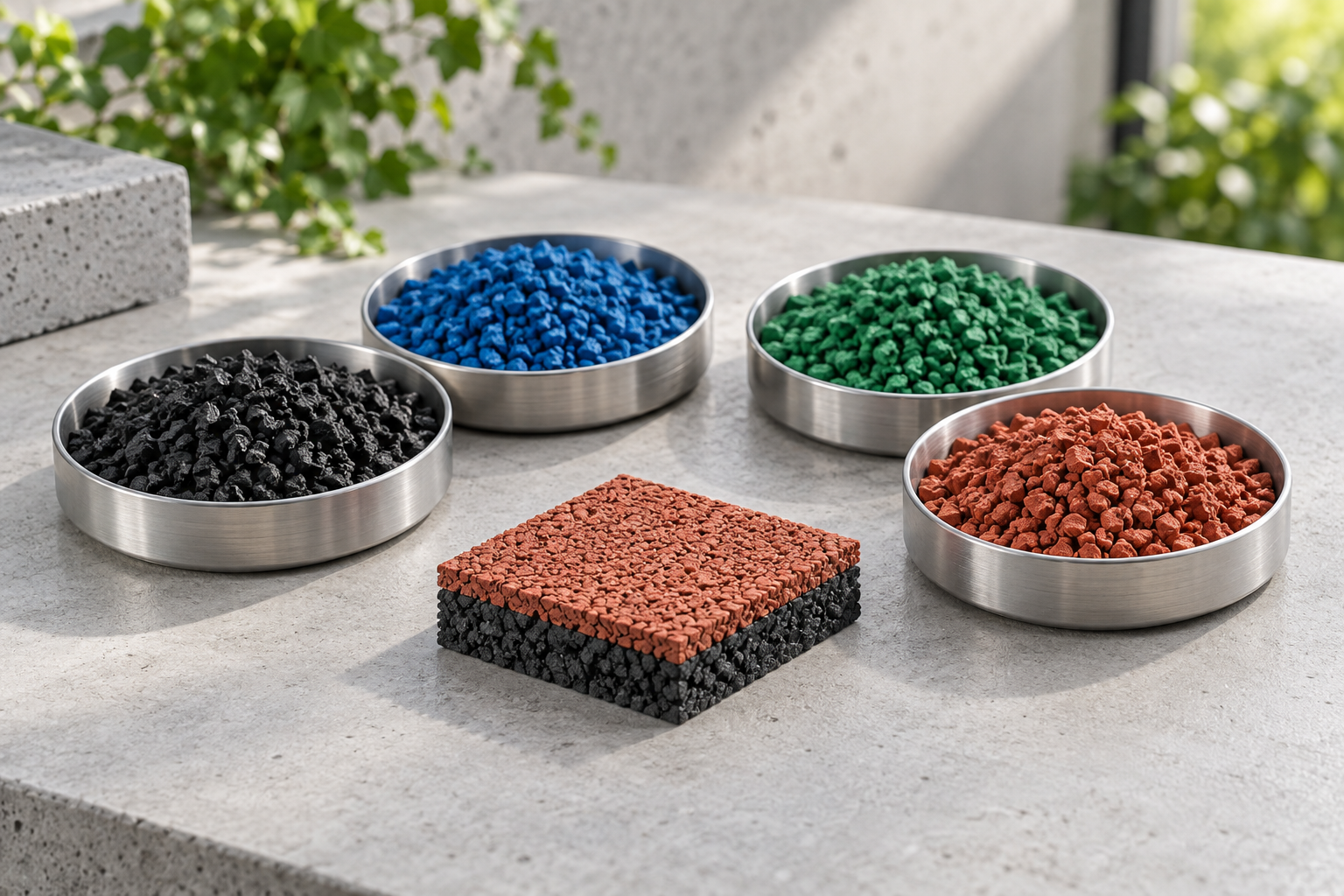
EPDM colour granules are commonly specified for the visible wear layer of a rubber surface. Colour, intended activity, exposure and surface texture belong in that specification. A granule colour alone does not define the finished surface performance.
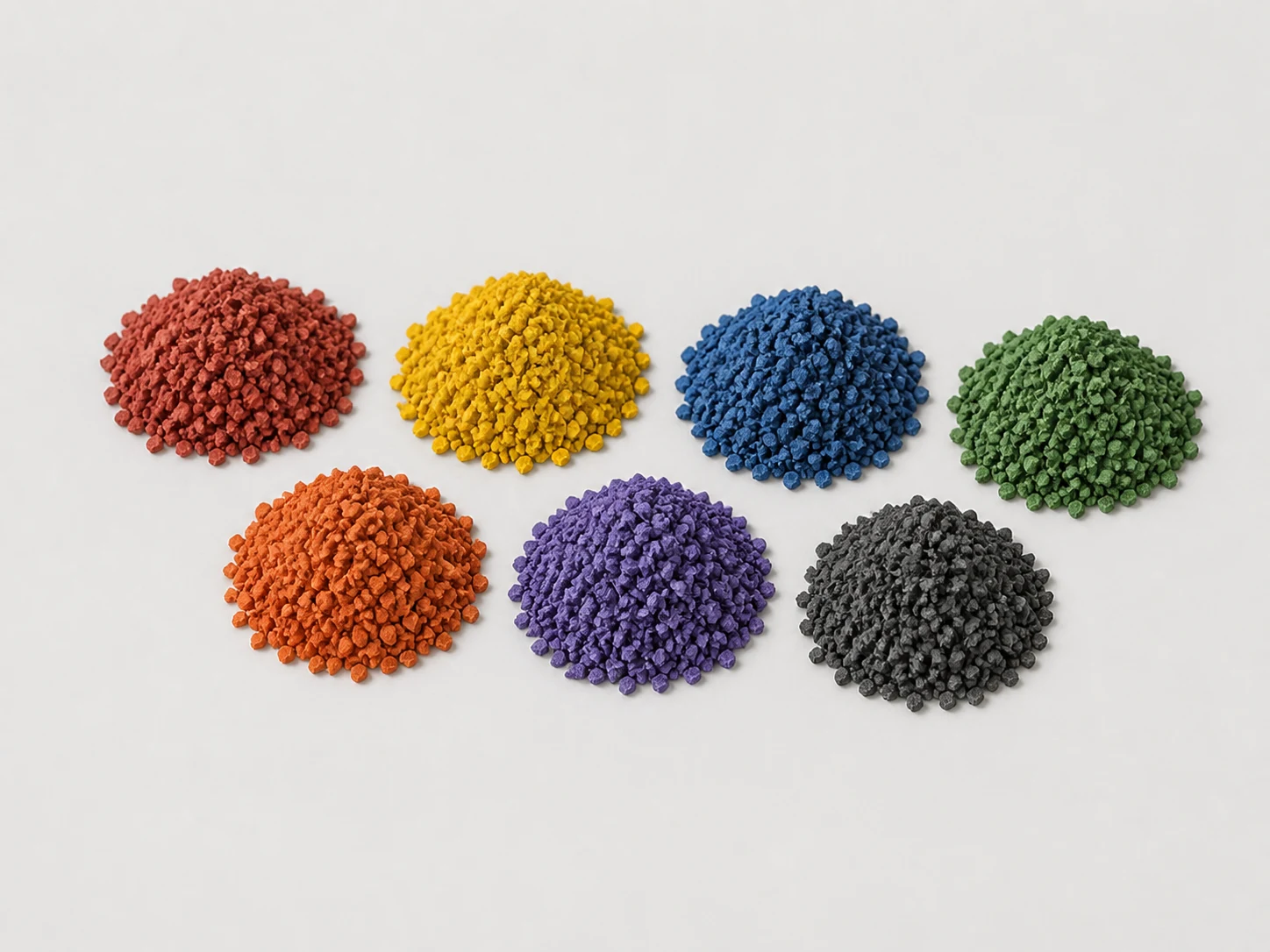
ACCT Global offers 25 colour options. Confirm the actual shade against a physical sample, especially when matching an existing area. Images on different phones and screens are useful for an initial discussion, not final colour approval.
Where SBR fits
SBR granules may be used in a specified impact base, rubber flooring build-up, track system or turf infill. These uses have different requirements. A material proposed for a bound base should not automatically be used as loose infill.
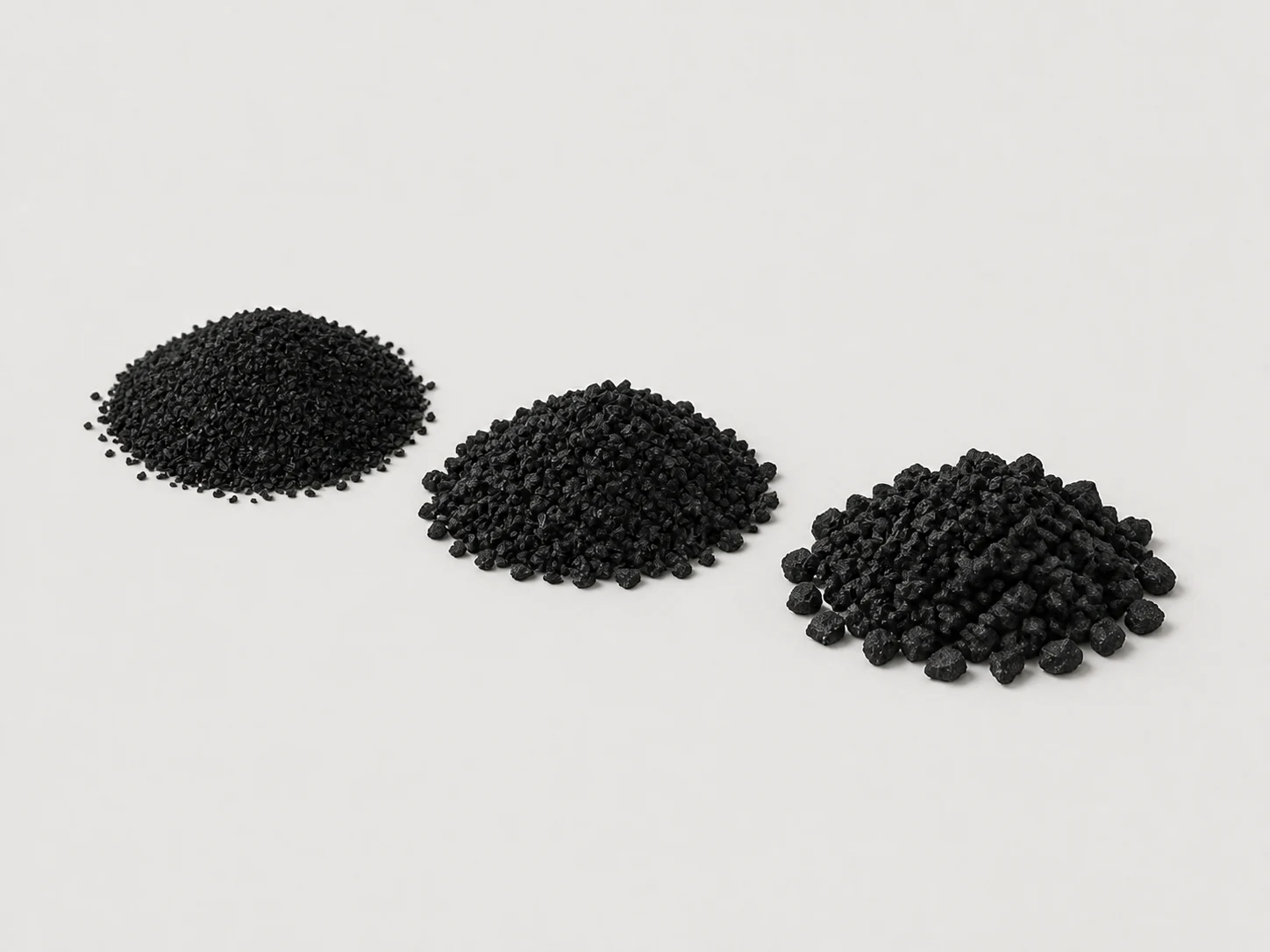
The listed particle sizes are 1-3mm, 1-4mm and 5-8mm. A particle-size range is not the layer depth. Confirm grading, compatible binder where relevant, and the documentation required by the flooring or turf specification.
Look at the entire build-up
A typical layered proposal can include a coloured wear layer, an impact layer and a prepared supporting base. Each element has a different job. Drainage, base stability, bonding and transitions must be resolved as part of the same installation.
Do not order loose granules by floor area alone. The estimate also needs a confirmed system, layer depths and material requirements. Similarly, an attractive colour render is not evidence of impact performance for a playground.
Where fall protection is required, ask for test evidence for the exact proposed surface and build-up. Discuss the equipment and site with the project professional before the material order is finalised.
Five questions before ordering
- Is the material for a wear layer, impact base or infill?
- What grading and installation method does the system require?
- Which binder or other components are specified?
- What base, drainage and exposure conditions apply?
- What samples and test documentation are required by the project?
For turf infill, confirm acceptance with the turf system supplier. For a track, follow the specific track build-up rather than treating all rubber surfaces as interchangeable.
Turn the material choice into a useful brief
Send the activity, location, measured area, existing base photos and preferred appearance. Tell us whether you need material supply or an installed surface, and include a specification if one already exists.
If the project is still at the planning stage, identify the intended use first. We can discuss a material route from there, without assuming that every playground, jogging track or sports space needs the same product combination.