Artificial grass
SBR infill for artificial grass: when to inspect, redistribute or top up
An artificial grass surface with uneven infill does not automatically need a full new load of rubber. Before ordering SBR for a top-up, find out whether the material has moved, become compacted or actually left the playing area. Those conditions need different responses.
Inspect the whole area, not just the worn-looking patch
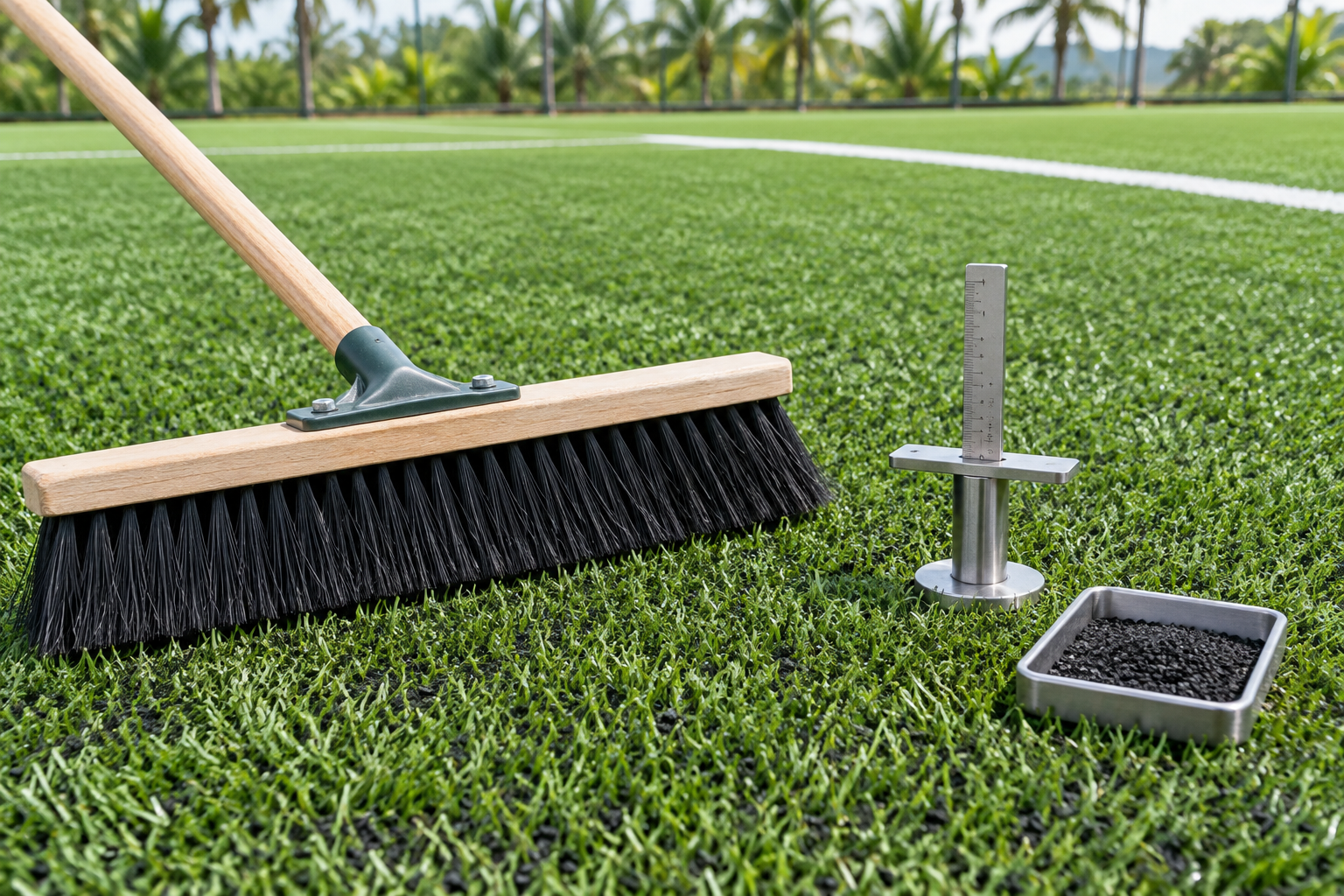
Start with the installer's maintenance instructions and an inspection plan. Mark entrances, goal areas, frequently used training lanes, seams, edges and drainage points. Photograph the same locations over time and record usage, weather and previous maintenance.
Look for material accumulating at the perimeter, uneven distribution, debris and changes in how the surface behaves. A visual check can identify where to investigate, but it cannot establish compliance or the exact amount of missing infill. Have a competent turf-maintenance contractor assess damaged seams or performance concerns before reopening an affected area.
Compare measurements with the original turf specification
Use the measurement method and target infill level specified for the turf system. Sample representative positions, not only the lowest-looking spot. Record the original carpet model, infill grading, sand and rubber arrangement, and any shock pad beneath the carpet.
If those records are unavailable, ask the installer or turf manufacturer to identify the system. Adding material until the fibres look a certain height is not a reliable substitute. Different systems can have different intended exposed-fibre lengths and infill requirements.
Redistribution and replenishment are different jobs
Where the original material has shifted, a contractor may recommend redistribution using the manufacturer-approved equipment and method. Where a measured deficit remains, a compatible top-up may be required. Compaction or contamination can need specialist treatment rather than another layer of material.
FIFA's football-turf installation guidance highlights the importance of maintenance resources and specialist equipment. Agree the maintenance method with your turf provider; this checklist is not an instruction to use a particular brush, machine setting or chemical.
Match replacement SBR before calculating the order
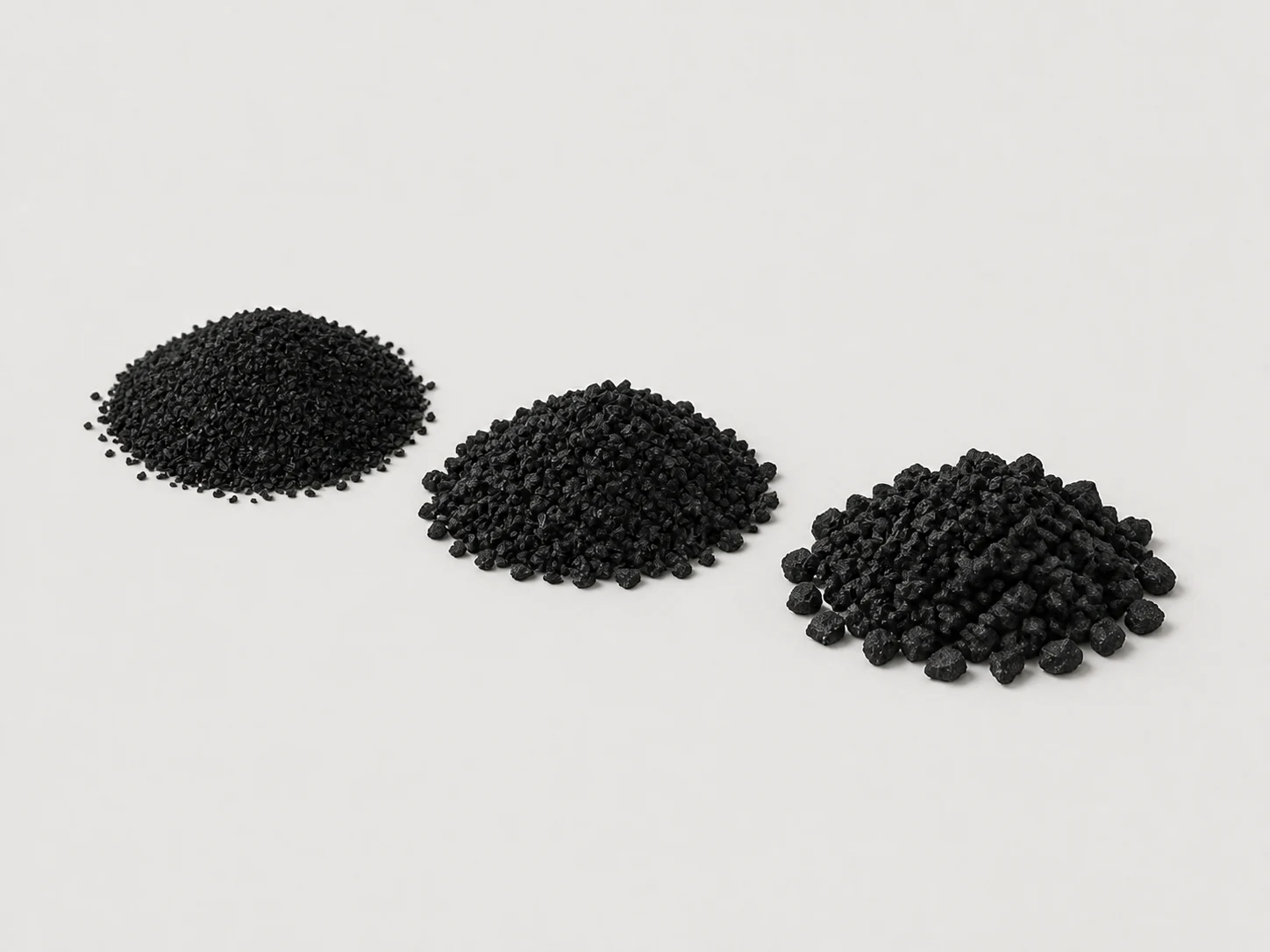
A top-up should follow the accepted material specification. Compare the proposed SBR granules with the required grading and documentation. Do not mix SBR with EPDM, organic infill or another grade just because it is available at a lower price.
Ask the contractor for a measured replenishment rate and the area to which it applies. Multiply those figures to estimate the material required, then confirm pack size and allowance with the supplier. Keep any redistribution work separate from the purchased top-up quantity so that the quotation is transparent.
Include edges, drainage and material containment
For an outdoor site, include an inspection after heavy rain in the maintenance plan. Ask the designer how perimeter details, access points and drainage features are intended to retain loose infill without obstructing water flow.
Collect displaced granules for assessment instead of washing them into drains. Do not return visibly contaminated material to the field without the maintenance contractor's approval. Ask for the appropriate handling and disposal route for collected waste, and retain a record of what was added or removed.
What to record after the work
- Date, inspected locations and measurements before and after work.
- Material identity, grading, batch and quantity added.
- Areas treated, equipment used and any outstanding defects.
- Checks required before use and the next inspection arrangements.
For an SBR supply enquiry, send the specification, site location, measured top-up requirement and photographs. Read our artificial grass SBR buyer's guide before approving a replacement material. Buying granules alone is not a substitute for assessing the installed turf.