Playground planning
Playground rubber mats or wet-pour: what should you compare?
Modular tiles and a continuous wet-pour surface offer different layouts and repair approaches. Neither can be chosen safely from colour or thickness alone: the play equipment and complete installed system come first.
Modular playground tiles
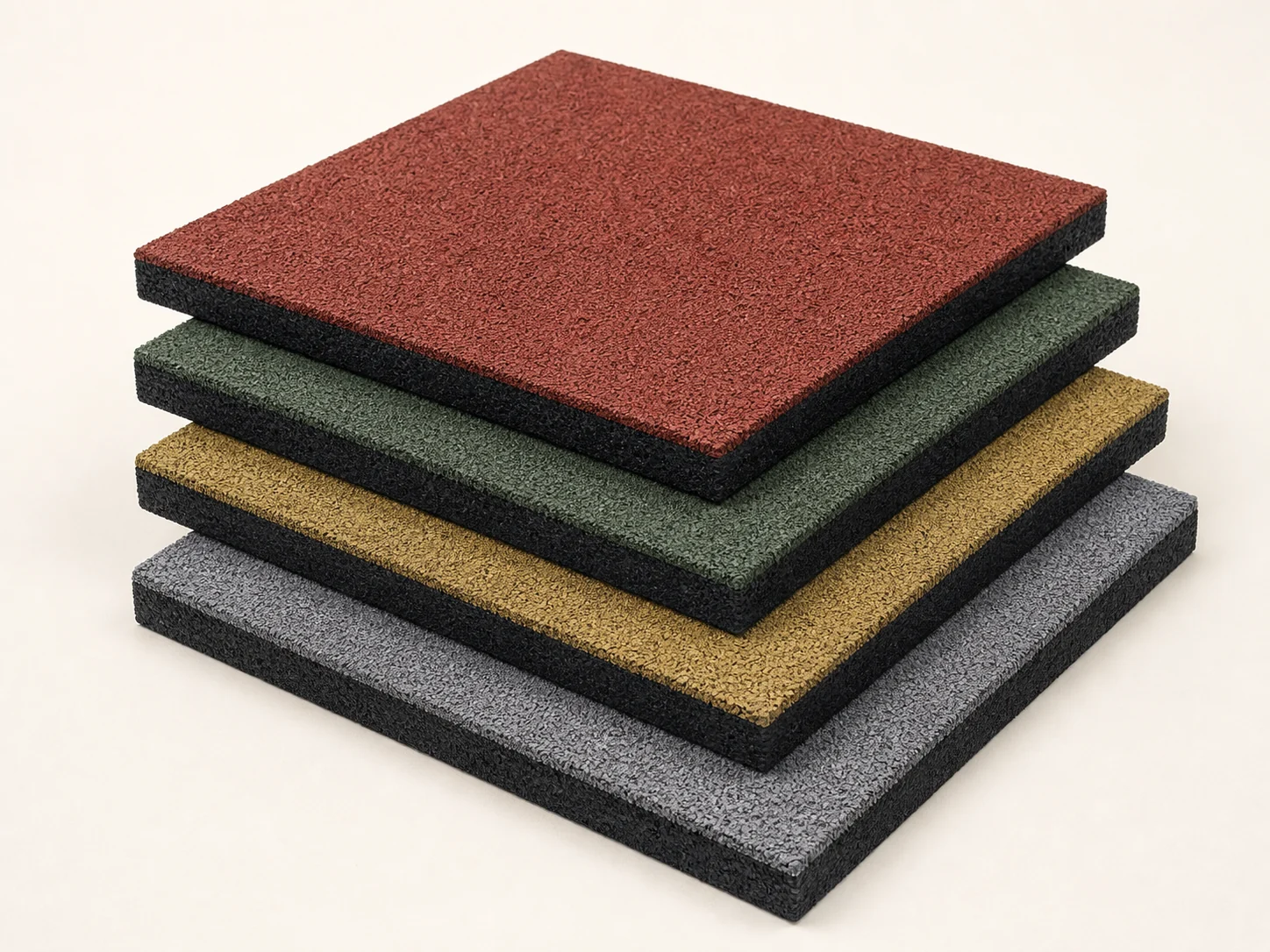
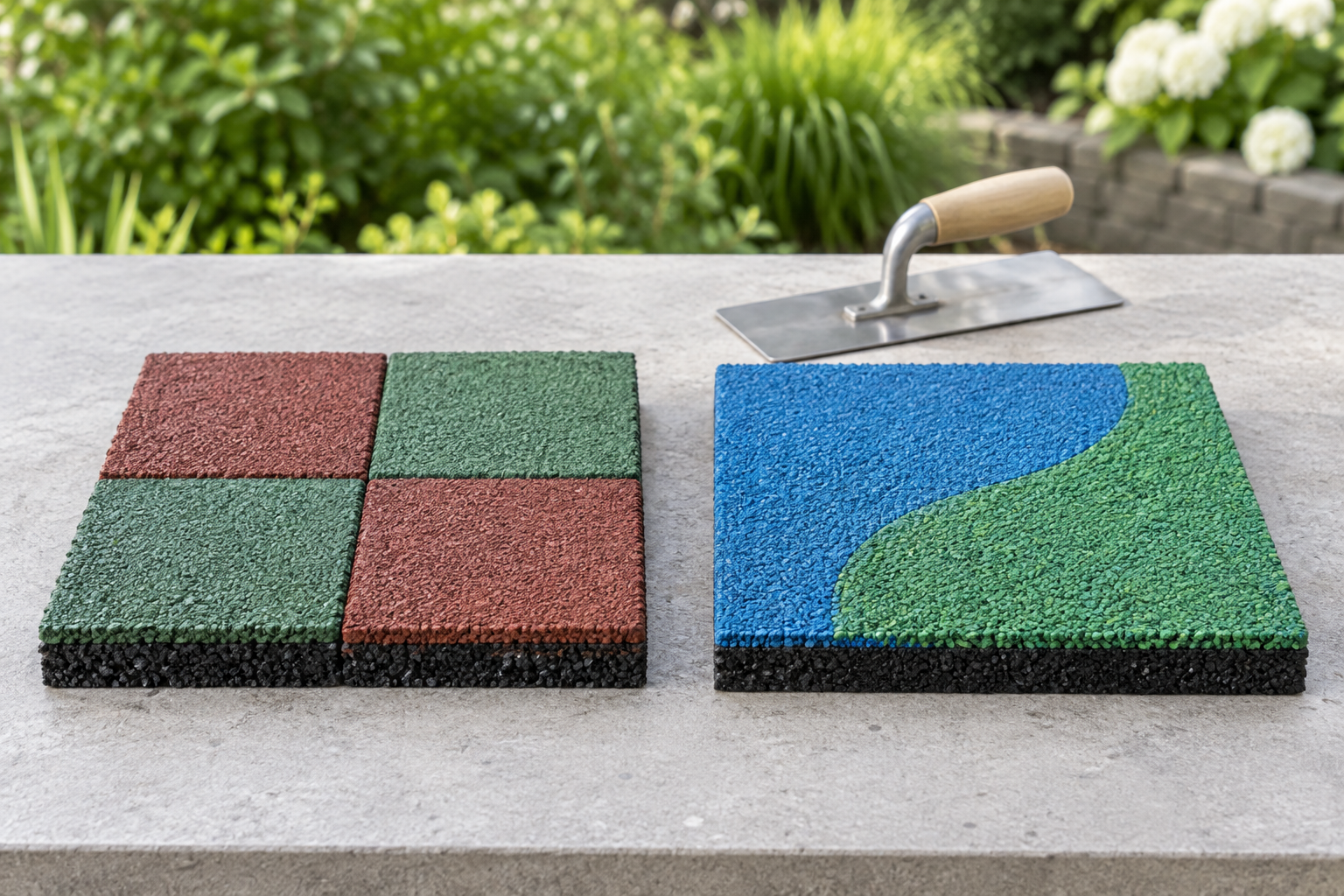
Playground Safety Rubber Mats are available in 500 x 500mm format with 25mm and 50mm options. Each tile has a coloured surface with a black rubber base underneath. The tiles form a modular layout, with joints and perimeter edges that need to be detailed.
Individual tiles can be considered for local replacement, but compatibility, colour variation and the condition of the base still need checking. Inspect joints and edges as part of routine maintenance, particularly where the surface meets a path or surrounding ground.
A continuous wet-pour system
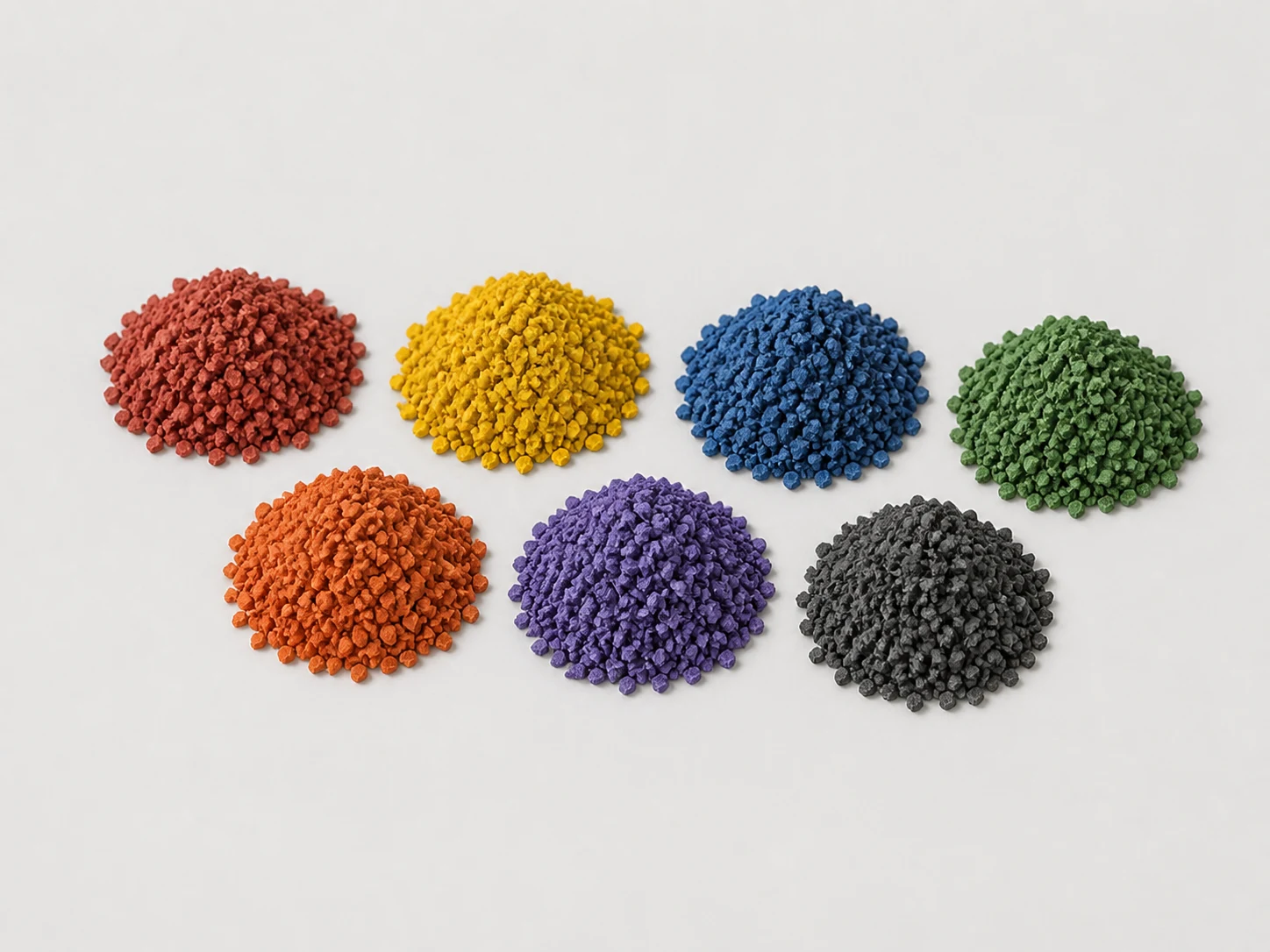
A specified wet-pour build-up can use an EPDM colour wear layer over an appropriate impact base. It allows continuous layouts and colour zoning, while installation quality depends on the system, preparation and site conditions.
Ask how installation conditions, curing, access restrictions and later repairs will be managed. A continuous appearance does not mean that repairs will always be invisible, or that the surface can compensate for a poor base.
Ask for impact evidence, not a generic promise
Identify the equipment fall height and relevant project requirements before selecting the surface. Request impact-test documentation for the exact product or system, installed at the proposed build-up. A thickness label by itself is not a critical fall-height rating.
The US Consumer Product Safety Commission explains the role of impact attenuation and surface testing in its Public Playground Safety Handbook. This is useful background guidance, not a statement that a product meets Malaysian project requirements or that ACCT Global holds a particular certification.
Have the equipment supplier and relevant project professional confirm the requirements for your site. Do not substitute an untested build-up on the assumption that a thicker material must be sufficient.
Compare the details around the surface
Look beyond the square metres. Where will rainwater go? Are surrounding paths higher or lower? How will the surfacing finish around posts, drains and access points? Are there damaged or unstable areas in the existing base?
These questions affect both tile and wet-pour options. Ask who is responsible for base repairs, drainage work and perimeter transitions, and ensure the quotation records those responsibilities.
A short comparison checklist
- Equipment layout, fall heights and required test evidence.
- Measured area, edges, posts and drainage points.
- Existing substrate and preparation scope.
- Colour layout, sample approval and replacement approach.
- Installation access, curing or reopening requirements, and maintenance instructions.
Send photos and the equipment details with your enquiry. A useful comparison is between two complete installed proposals, not simply two prices per square metre.